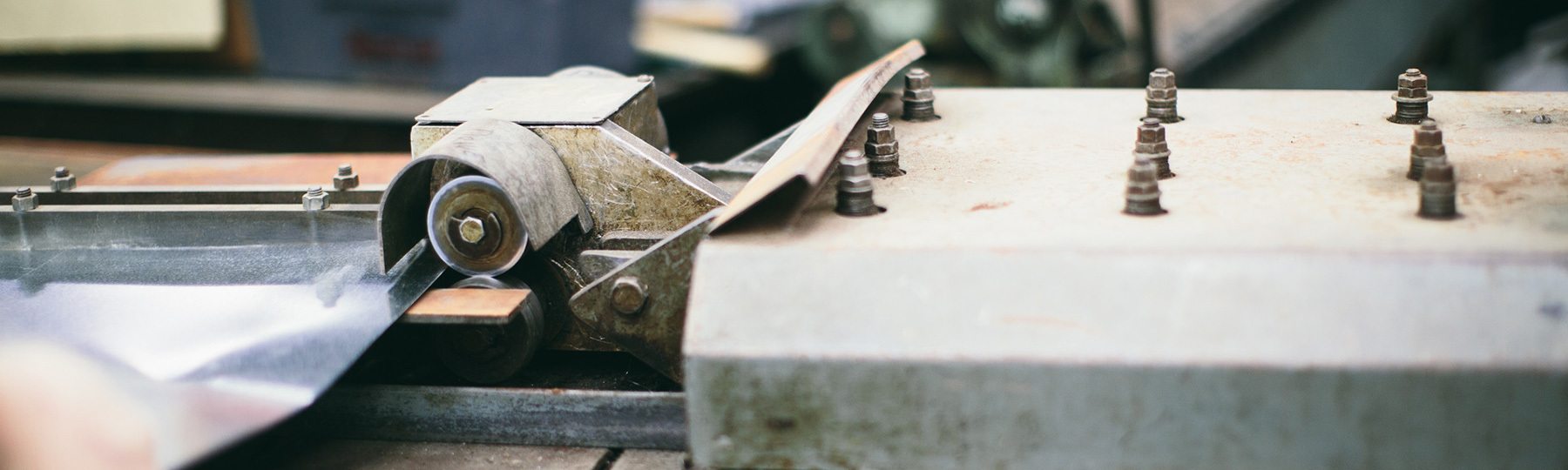
Custom Sheet Metal Fabrication Built for Precision HVAC Systems
Every properly functioning heating and cooling system depends on ductwork that fits the space it serves, and that is precisely where sheet metal fabrication earns its importance. Rather than forcing generic components into an installation, custom-fabricated sheet metal allows plenums, transitions, elbows, and register boxes to match the exact dimensions of a structure. At Air Mechanical, Inc., we approach fabrication as the foundation of an efficient system, because even a well-sized furnace or air conditioner will underperform if the metal moving the air is poorly built.
Sheet metal work involves cutting, bending, forming, and joining flat stock into three-dimensional components. The material most commonly used in HVAC is galvanized steel, prized for its corrosion resistance and structural rigidity. Depending on the job, we also work with aluminum for lightweight applications and stainless steel where moisture or chemical exposure is a concern. Gauge selection matters here: heavier gauges resist deformation on large trunk lines, while lighter gauges keep smaller branch runs manageable and cost-effective.
Our Fabrication Process From Measurement to Installation
Accurate fabrication begins long before any metal is cut. We take field measurements, review load calculations, and account for airflow requirements so each piece contributes to balanced system performance. From there, layouts are developed and transferred to the sheet stock. Shears and notchers establish the flat pattern, brakes create the folds and seams, and locking or welding techniques finish the joints into airtight assemblies.
The methodology we follow keeps quality consistent from one project to the next. Below is a general outline of how a typical fabrication job progresses:
- Assessment and measurement: We document the space, existing equipment, and airflow demands to determine the correct sizing and material.
- Pattern development: Flat layouts are drawn so bends, seams, and connection points align precisely once formed.
- Cutting and forming: Stock is sheared, notched, and bent to shape using brakes and rollers for straight runs and curved transitions.
- Seaming and sealing: Joints are locked, riveted, or welded, then sealed to minimize air leakage.
- Fitting and installation: Finished components are test-fitted, adjusted as needed, and installed into the system.
This sequence gives us control over tolerances that off-the-shelf parts simply cannot match. A transition piece that steps down a duct by an inch, a custom offset that routes around a floor joist, or a plenum shaped to a tight mechanical room all become straightforward when fabricated to specification rather than improvised on site.
Applications Across Residential and Commercial Projects
Sheet metal fabrication supports a wide range of comfort and ventilation needs. In homes, we build supply and return ductwork, furnace plenums, filter racks, and register boxes that route conditioned air efficiently to every room. When a home is remodeled or an addition is built, custom metalwork lets us extend the existing system without compromising airflow or creating restrictive bottlenecks.
Commercial and light industrial settings introduce more demanding requirements. Larger trunk lines, rooftop unit curbs, exhaust ductwork for kitchens, and make-up air systems all rely on fabricated metal capable of handling higher volumes and, in some cases, elevated temperatures or grease exposure. We also produce specialty pieces such as dampers, access doors, and equipment stands. Because each commercial building presents unique layout constraints, the ability to fabricate on demand keeps projects on schedule and reduces costly delays.
Technical Considerations That Affect Performance
Duct design is governed by principles that directly impact energy use and comfort. Undersized ductwork increases static pressure, forcing blowers to work harder while delivering less air. Oversized ductwork wastes material and can allow air velocity to drop too low. Proper fabrication balances cross-sectional area, seam integrity, and smooth interior transitions to keep air moving with minimal resistance. Sharp, abrupt turns generate turbulence, so radius elbows and gradual transitions are used wherever practical.
Sealing and insulation round out a quality assembly. Airtight seams prevent conditioned air from escaping into unconditioned spaces, and insulation controls heat gain or loss along the duct run. These details separate a system that merely functions from one that operates efficiently for years. Serving Erie, CO and the surrounding areas since 1983, Air Mechanical, Inc. is a family owned and operated, residential and commercial HVAC provider, and our NATE-certified technicians bring that same attention to detail to every fabricated component.
Whether you are building new, upgrading equipment, or repairing an aging system throughout Erie, CO and the surrounding areas, custom sheet metal fabrication ensures your ductwork performs as intended. Reach out to Air Mechanical, Inc. to discuss your project and discover how precision metalwork improves comfort and efficiency.